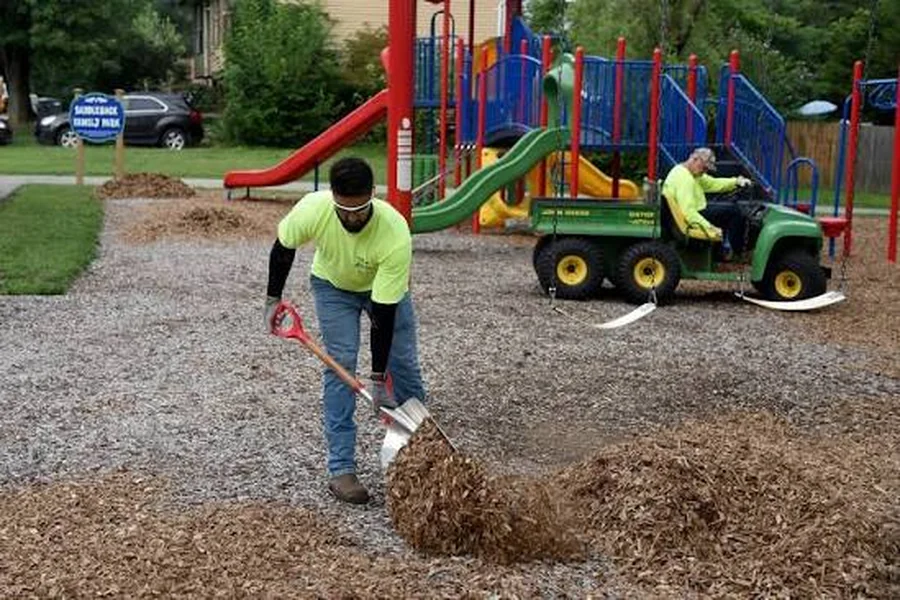
A public park can look perfectly maintained in early spring, but a few weeks of warm weather and regular rainfall can quickly change things. Grass grows across walking paths, weeds spread around benches, shrubs block sightlines, and overgrown vegetation begins to interfere with playgrounds and recreational areas.
- Why Vegetation Management Matters in Public Spaces
- 1. Choosing the Right Equipment for Different Areas
- 2. Managing Different Types of Public Landscapes
- 3. Equipment Comparison for Vegetation Maintenance
- 4. Seasonal Maintenance and Vegetation Growth
- 5. Protecting Wildlife, Soil, and Natural Areas
- Best Practices & Pro Tips for Public Grounds Maintenance
- 6. Matching Maintenance Plans to Property Size
- Building a Sustainable Long-Term Maintenance Strategy
For parks departments and grounds maintenance crews, keeping these spaces accessible requires more than occasional mowing. Vegetation must be managed throughout the year while protecting visitors, maintaining healthy landscapes, and minimizing disruption to public activities.
Vegetation management is the planned maintenance of grass, weeds, shrubs, trees, and other plant growth around public spaces to preserve accessibility, safety, appearance, and ecological health. It involves selecting suitable equipment, establishing maintenance schedules, and adjusting work practices to local environmental conditions.
Why Vegetation Management Matters in Public Spaces
Public parks and recreational facilities serve people of different ages and abilities. Overgrown vegetation can affect how safely and comfortably visitors use these spaces.
For example, tall grass around a playground can make it difficult for parents to supervise children. Shrubs extending over a walking trail can force pedestrians toward the edge of the path, while weeds growing through pavement can create uneven surfaces.
Consistent outdoor maintenance helps address several concerns:
- Public accessibility: Clear paths, entrances, and recreational areas make facilities easier to navigate.
- Visitor safety: Maintaining visibility around intersections, playgrounds, and parking areas helps reduce potential hazards.
- Landscape health: Appropriate pruning and mowing support healthy plant growth.
- Pest management: Removing excessive vegetation around heavily used areas can reduce some pest-harboring conditions.
- Property appearance: Well-maintained grounds encourage regular community use.
The goal should not be to remove every naturally growing plant. Instead, maintenance teams should distinguish between vegetation that creates problems and vegetation that contributes to habitat, shade, and soil stability.
1. Choosing the Right Equipment for Different Areas
Public landscapes contain several types of terrain, and no single machine can handle every maintenance requirement.
Commercial Mowers for Open Green Spaces
Large parks, sports fields, and recreational lawns often require commercial riding or zero-turn mowers.
These machines cover substantial areas efficiently and are suitable for regularly maintained grass. Smaller walk-behind mowers are more practical around playgrounds, garden borders, and restricted spaces.
Mower selection should account for slope, ground conditions, obstacles, and the required cutting height.
Trimmers and Brush Cutters for Difficult Areas
String trimmers are useful around benches, signposts, trees, fences, and other places that larger mowers cannot reach.
Brush cutters are better suited to thicker vegetation, including dense weeds and tougher growth along trail edges. Operators must use the correct cutting attachment and protective equipment for the material being cleared.
Blowers and Cleanup Equipment
Leaf blowers help clear paved paths, parking areas, and recreational surfaces.
Cordless equipment can be especially practical around smaller parks and facilities near residential neighborhoods because it eliminates direct exhaust emissions during operation. However, operating noise and airflow can still disturb visitors, so scheduling and appropriate power settings matter.
For teams comparing battery-powered equipment, greenworks outdoor tools provides a reference for reviewing available outdoor equipment options. Before selecting tools for public maintenance, compare battery compatibility, runtime, replacement costs, service availability, and the demands of the intended application.
2. Managing Different Types of Public Landscapes
Maintenance requirements vary depending on how a public space is designed and used.
Public Parks and Playground Areas
Open lawns generally require routine mowing, edging, and debris removal.
Playground surroundings need additional attention. Grass should be maintained without allowing equipment to damage safety surfacing, fencing, or playground structures.
Crews should inspect the area before mowing and remove stones, branches, and other objects that could become projectiles.
Walking and Hiking Trails
Trail maintenance requires a different approach from ordinary lawn care.
Vegetation along paths should be controlled sufficiently to maintain comfortable passage and clear sightlines. However, excessive clearing can damage natural habitats and increase erosion.
For example, a paved urban walking trail may need regular edging and shrub trimming, while a natural woodland trail may benefit from selective pruning and seasonal brush removal.
Sports Fields and Recreational Facilities
Sports fields require consistent grass height and surface conditions. Athletic facilities may also have specific maintenance standards for field markings, drainage, and playing surfaces.
Crews should coordinate mowing, trimming, and cleanup around scheduled practices, games, and community events.
3. Equipment Comparison for Vegetation Maintenance
Different tools are suited to different maintenance conditions.
| Equipment | Best application | Main advantage | Key consideration |
| Commercial riding mower | Large park lawns | Covers extensive areas | Requires suitable access |
| Walk-behind mower | Small or restricted lawns | Better maneuverability | Slower on large properties |
| String trimmer | Edges and obstacles | Precise vegetation control | Requires operator skill |
| Brush cutter | Dense weeds and brush | Handles tougher growth | Higher safety requirements |
| Cordless blower | Paths and paved areas | Convenient operation | Battery runtime and noise |
| Hedge trimmer | Shrubs and landscape borders | Consistent shaping | Blade and operator safety |
| Manual pruning tools | Selective vegetation removal | Greater control | More labor-intensive |
A practical equipment fleet usually combines larger machines with handheld tools. This allows crews to handle open lawns efficiently without using oversized equipment in sensitive or restricted areas.
4. Seasonal Maintenance and Vegetation Growth
Vegetation management should follow local growing conditions rather than relying on the same schedule throughout the year.
Spring: Preparing Public Spaces
Spring growth can be rapid, particularly after regular rainfall.
Maintenance teams should inspect trail edges, remove fallen branches, check drainage channels, and begin mowing as grass growth requires.
This is also a good time to identify damaged shrubs and areas where winter weather has affected paths or landscaping.
Summer: Managing Rapid Growth
During summer, mowing and trimming may become more frequent.
Hot weather also creates additional challenges for workers. Equipment should be checked regularly, and maintenance schedules should account for heat exposure and visitor activity.
Where possible, noisy work should be scheduled during permitted lower-use periods.
Fall: Leaves and Overgrown Vegetation
Falling leaves can cover paths, drains, and recreational surfaces.
Crews may need additional blowers, collection equipment, and trailers to remove accumulated debris. Selective pruning can also prepare landscapes for winter, although species-specific pruning requirements should be considered.
Winter: Inspection and Preparation
In colder regions, active vegetation growth slows considerably.
This provides an opportunity to service mowers, inspect handheld equipment, sharpen cutting attachments, and plan improvements for the following growing season.
5. Protecting Wildlife, Soil, and Natural Areas
Effective vegetation management should balance public access with environmental responsibility.
Removing all vegetation from trail margins can expose soil, increase erosion, and eliminate useful habitat.
Maintenance teams should identify sensitive areas before beginning extensive clearing. Native plants, established trees, and natural buffer zones may provide important environmental benefits.
The USDA Natural Resources Conservation Service offers useful information about conservation practices for managing soil, vegetation, and natural resources.
Where invasive plants are present, removal methods should be selected carefully to prevent spreading seeds or plant fragments to other locations.
Herbicides, when permitted and necessary, should only be applied by appropriately trained personnel following product labels and applicable regulations.
Best Practices & Pro Tips for Public Grounds Maintenance
Good equipment alone does not guarantee effective vegetation management. Consistent procedures help crews complete work safely and avoid unnecessary damage.
- Inspect areas before starting: Look for visitors, pets, obstacles, damaged branches, and uneven ground.
- Prioritize high-use locations: Maintain playgrounds, entrances, parking areas, and main walking routes regularly.
- Use the correct machine: Avoid operating large mowers in narrow or environmentally sensitive areas.
- Plan battery usage: For cordless equipment, carry spare batteries and match capacity to expected workloads.
- Control equipment noise: Schedule mowing and blowing around public activities and local noise restrictions.
- Maintain clear sightlines: Trim vegetation around trail intersections, signs, and entrances.
- Protect trees and shrubs: Avoid damaging bark and root zones with mower decks or trimming attachments.
- Keep maintenance records: Track mowing dates, repairs, invasive plant locations, and recurring problem areas.
- Train operators: Ensure workers understand equipment controls, protective equipment, and site-specific hazards.
6. Matching Maintenance Plans to Property Size
A small neighborhood park covering half an acre may only require a walk-behind mower, trimmer, blower, and basic pruning tools.
A five-acre community park may need a riding mower, several handheld tools, and a small utility vehicle for transporting equipment.
Larger recreational properties covering 20 acres or more generally require a planned equipment fleet, designated maintenance zones, and coordinated crew schedules.
Trail systems also require separate planning. A two-mile paved trail may need routine edging and debris removal, while a longer natural trail may require selective brush cutting, drainage inspections, and seasonal vegetation control.
The important point is to plan around actual maintenance requirements rather than acreage alone.
Building a Sustainable Long-Term Maintenance Strategy
Managing vegetation around parks, walking trails, and recreational facilities requires a combination of appropriate equipment, trained operators, and consistent scheduling.
Maintenance teams should begin by identifying high-use areas, environmentally sensitive locations, and recurring vegetation problems. From there, they can establish seasonal schedules and select equipment that matches the property’s terrain and workload.
Regular inspections, preventive equipment maintenance, and sensible use of cordless and conventional yard tools can help control operating costs while keeping public spaces accessible.
Most importantly, successful vegetation management is about maintaining a balance. Parks should remain safe and welcoming without sacrificing the trees, native plants, and natural features that make outdoor spaces valuable to the community.
A well-planned maintenance program makes that balance easier to achieve year after year.
Add public-use safety proceduresClarify homeowner relevance