A cheap and useful pantry starts with about a dozen staples that make many different meals, and grows slowly as you learn what you actually cook. Resist buying everything at once. A small, well-chosen cupboard costs less to fill, wastes less and makes it easier to throw together dinner when the fridge is empty.
What Should You Buy First?
Buy a starch, a protein tin or two, something tomato-based and a few things to add flavour. These items cover most simple meals and keep well.
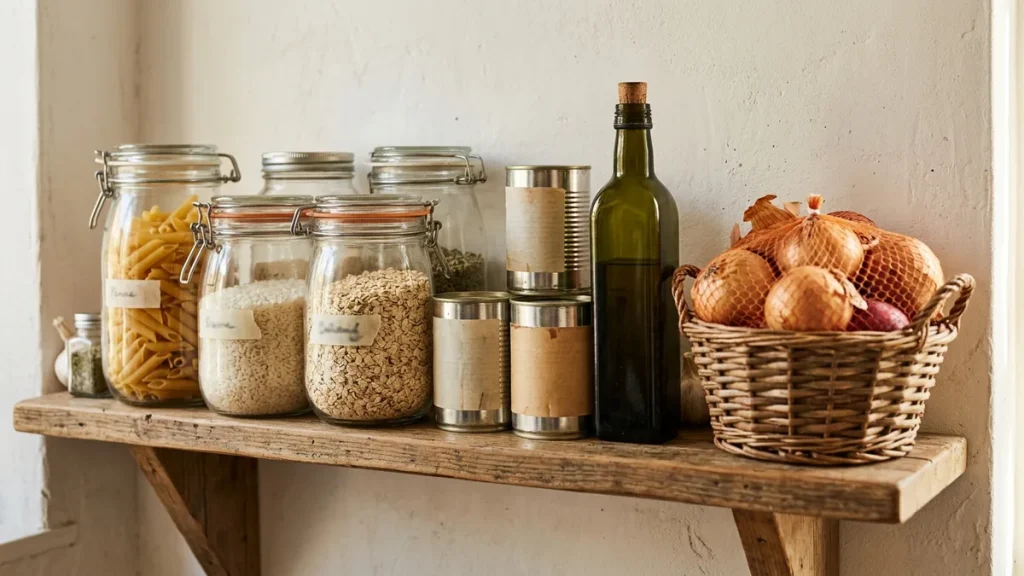
- Pasta, rice and oats as your starch base
- Tinned tomatoes, which work as a sauce, a soup base or a stew starter
- Tinned beans or chickpeas, or dried lentils, for protein
- Cooking oil and a bag of onions, which form the start of many dishes
- Salt, pepper and one or two spices you enjoy, such as paprika or cumin
- Stock cubes, for soups, rice and sauces
- Peanut butter or another spread for quick breakfasts and snacks
- A tin of fish, if you eat it, for a fast lunch
Choose the cheapest version of each. Own-brand and basic ranges are usually the same food in plainer packaging.
What Can Wait Until Later?
Anything you do not need this week can wait. Sauces, vinegars, baking supplies, extra spices and jars add up quickly, and they sit unused if you buy them before you have a meal in mind.
A good rule is to add one new item a week and only when a recipe you plan to cook needs it. Typical second-round items are flour, sugar, honey, soy sauce, vinegar, a tin of coconut milk and a few more spices. None of them is needed on day one, and each one is easier to justify once you have used a recipe that calls for it. After a month you will have a pantry shaped by what you eat instead of a shelf of half-used jars.
How Long Do Pantry Foods Keep?
Unopened tins keep for a long time, though quality fades. The US Department of Agriculture says high-acid canned foods, such as tomatoes and fruit, keep their best quality for about 12 to 18 months. Low-acid canned foods like meat, fish and most vegetables keep their best quality for about 2 to 5 years when stored in a cool, clean, dry place.
| Type of tin | Examples | Best quality for about |
|---|---|---|
| High-acid | Tomatoes and fruit | 12 to 18 months |
| Low-acid | Meat, fish and most vegetables | 2 to 5 years |
Dates on shelf-stable products mostly describe quality, not safety. That is no reason to ignore the condition of a tin. The department says to discard cans that are leaking, bulging, badly dented or rusted, and never to use food from them.
Dry goods such as pasta, rice and oats keep a long time too, but the pack date and the storage conditions matter. Once a packet is open, move the contents to a sealed container so the food stays dry and stays clear of pests.
How Do You Store a Pantry in a Small Space?
Keep food in a cool, dry place away from the cooker, the radiator and the sink. The USDA recommends storing canned goods below 85 F, away from heat and moisture.
- Use one shelf or one box if you share a kitchen, and label it with your name.
- Put new purchases behind older ones so you use the oldest first.
- Use clear, sealed containers for open packets so you can see what is left.
- Keep onions and potatoes in a cool, dark, dry spot.
- Do a quick check every month, and move items that are close to their date to the front.
A small cupboard is enough. A tidy shelf makes it easier to see when you are running low, which stops accidental double-buying.
Which Fresh and Frozen Items Support a Pantry?
A few cold-storage items make the shelf stretch further. Frozen vegetables turn pasta, rice and eggs into a full meal, and a box of eggs keeps well. The US Department of Agriculture lists raw eggs in the shell at three to five weeks in a fridge set at 40 F or below.
Onions, carrots and potatoes last longer than most fresh vegetables when stored somewhere cool and dry. Buy them loose or in small bags so you take only what you can use.
How Do You Keep Pantry Costs Down?
Compare the price per kilogram or per litre, not the price on the shelf tag. A bigger pack is only cheaper if you will use it all before it goes stale.
- Plan two or three meals before you shop, and buy for those first.
- Pick own-brand versions of plain staples.
- Buy extra only when a staple you use weekly is discounted and you have room to store it.
- Use up what you have before restocking.
Write a short list on your phone as items run out. It stops both the late-night run to the shop and the purchase of a second jar of something you already own.
Which Meals Does a Basic Pantry Cover?
A basic pantry covers any meal built from a base, a tin and a flavour. The pattern is easy to remember and easy to vary.
| Base | Tin or dried protein | Flavour |
|---|---|---|
| Pasta | Tinned tomatoes and beans | Garlic, onion and dried herbs |
| Rice | Chickpeas | Curry powder and stock |
| Oats | Peanut butter | A pinch of cinnamon and fruit, if you have it |
| Toast | Tinned fish | Lemon or black pepper |
Add a fresh vegetable or a frozen one when you can. That turns a pantry meal into a more complete one without a big shopping trip.