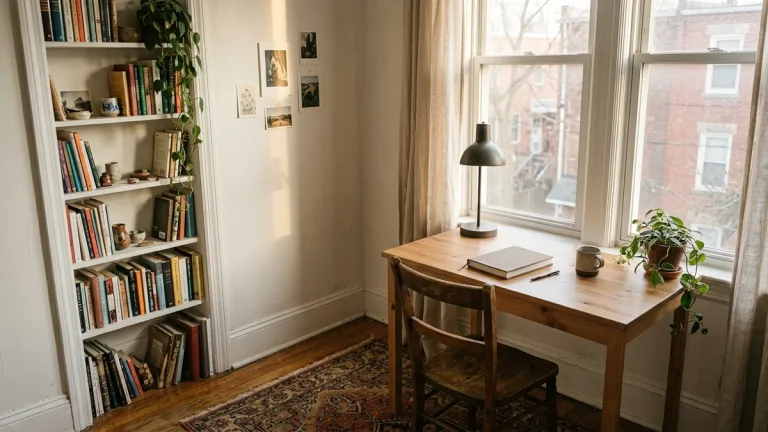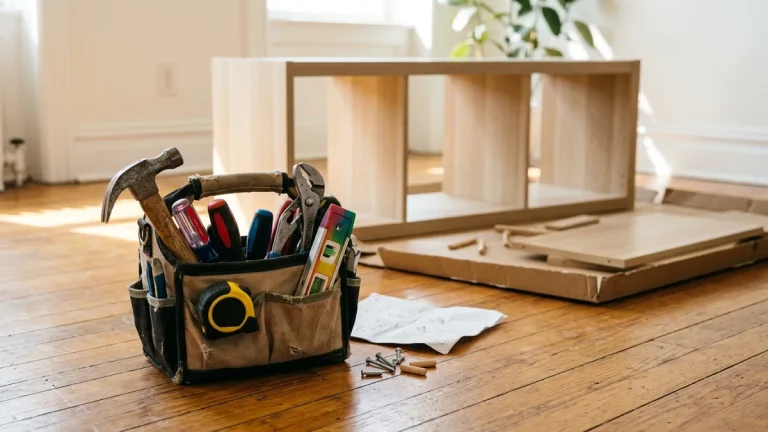
You can make a small rented room feel bigger without touching the walls by adding light, clearing the floor, and choosing furniture that fits the space instead of filling it. Most of these changes cost little and can be packed up on moving day.
This guide sticks to ideas a tenant can undo, and it points out where a quick check of your lease saves trouble. Students in shared apartments or dorm-style rooms can use the same approach, though a residence hall may have its own rules about what you can hang or plug in.
What Can You Change in a Rented Room?
You can change anything you can remove without leaving a mark, plus whatever your lease or landlord allows in writing. Painting, drilling and fixed shelves are the usual gray areas, so read the lease first and ask by email if it does not say.
A written yes is worth keeping. If a landlord later claims damage, a message that says you were allowed to hang shelves or repaint is much easier to point to than a spoken agreement.
Everything else in this guide works with removable items: lamps, textiles, mirrors, freestanding furniture and storage that sits on the floor or hangs over a door.
How Does Light Make a Room Feel Bigger?
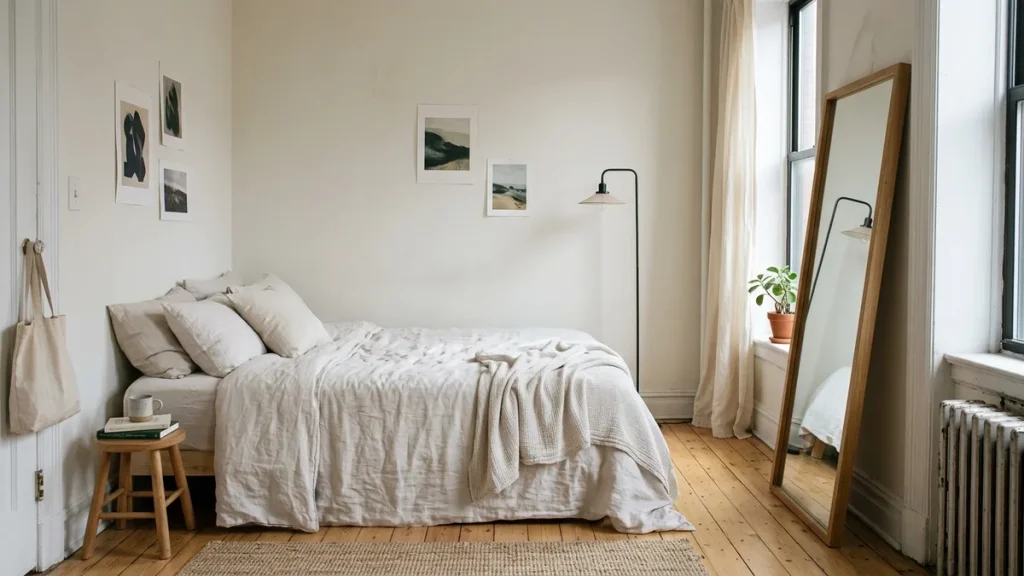
Even light makes a room feel bigger because dark corners read as lost space. Open curtains fully during the day and hang them wide of the window frame, so the glass is not half covered.
At night, spread light around instead of relying on one ceiling fixture. A small lamp in a far corner and another near the bed pushes the edges of the room outward.
- Use bulbs with the same warm or cool tone in every lamp, so the room looks consistent.
- Choose lampshades in light colors, since dark ones soak up the glow.
- If the landlord’s ceiling light is harsh, keep it and add lamps rather than replacing it. If you swap a shade or bulb, store the original for move-out.
Which Furniture Choices Help Most?
Fewer and smaller pieces help most, especially pieces you can see the floor under. Furniture on legs shows more floor, and more visible floor makes the room look deeper.
Look for items that do two jobs, such as a bed with drawers underneath or a fold-flat desk. Measure the room and the doorway before you buy, because a sofa that fits the space on a website may not fit up your stairs.
| Common problem | Renter-friendly fix | Check first |
|---|---|---|
| — | — | — |
| Not enough shelf space | Tall freestanding bookcase placed against the longest wall | Whether the lease requires anchoring tall furniture |
| Dark corner | Floor lamp with a light shade | Where the outlets are |
| Bulky desk | Narrow desk or a fold-away table | Door and stair measurements |
| Cluttered bed area | Under-bed boxes and a headboard with storage | Bed frame height |
Placement matters too. Keep the main walking path clear and avoid putting tall furniture directly in front of a window, which blocks light and the view.
Do Mirrors and Light Colors Really Work?
Yes, in a modest way. A large mirror reflects light and can double the sense of depth, and a leaning floor mirror needs no nails. The best spot is usually opposite or beside a window, where it bounces daylight back into the room.
You cannot repaint, so use fabric for color. Light curtains, a pale bedspread and a rug in a soft tone bring brightness without paint. Keeping most large surfaces in a similar shade makes the room feel calmer and less chopped up, and a few darker accents keep it from looking flat.
If you do hang anything with removable adhesive, read the weight rating on the pack and follow its surface instructions. Even removable products can lift paint on some walls, so test a small hidden spot first.
How Do You Keep Floors and Surfaces Clear?
Give every item a home, and store things upward and out of sight instead of outward. A clear floor does more for a small room than any decoration.
Clear the floor first. Furniture you can see around makes a room feel larger than furniture pushed against every wall.
Over-door hooks, hanging organizers and stackable boxes use space nobody notices. Keep surfaces such as the desk and bedside table nearly empty, and give small items a tray or box so they read as one object.
Plants help too: one or two small ones on a windowsill add life without taking floor space. A simple routine keeps the gains. Before bed, put back anything that has drifted onto the floor, and once a month check whether something new has arrived without something old leaving.
Frequently Asked Questions
Does a rug make a small room look smaller?
Usually the opposite. A rug large enough for the front legs of the bed or sofa to sit on ties the furniture together and makes the floor look like one wide surface. A tiny rug in the middle tends to make the space look broken up.
Can curtains make the ceiling look higher?
Often yes. Hang the rod closer to the ceiling and let the curtains reach the floor. Check your lease before drilling, and use a tension rod or a rod that fits the existing brackets if drilling is not allowed.
What should renters avoid in a small room?
Avoid anything that causes damage you cannot undo, such as painting without permission or fixing large shelves to the wall. The saving from a quick fix is small compared with a lost deposit. Heavy furniture dragged across the floor can scratch it as well, so felt pads under the legs are a cheap precaution.