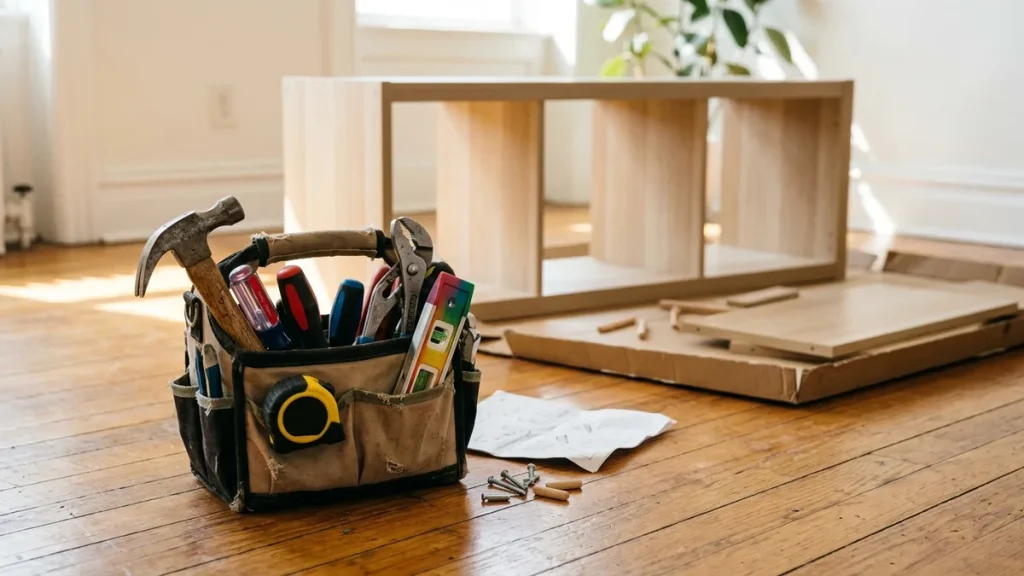
A first-apartment toolkit needs only about a dozen basic items: a screwdriver set, a hammer, pliers, a tape measure, a level, an adjustable wrench, a utility knife, a flashlight and a few small fixings. That covers most small jobs a tenant is allowed to do.
The list below puts the tools in order of what you will actually use, and it explains where a renter should stop and call the landlord instead.
What Tools Do You Need in a First Apartment?
Start with the hand tools below. They are small, they fit in one box, and they handle things like assembling furniture, tightening loose handles and hanging a light frame.
| Tool | What it is for |
|---|---|
| — | — |
| Screwdriver set (flat and cross-head) | Flat-pack furniture, cabinet hinges, battery covers |
| Hammer | Small nails, tapping parts into place |
| Tape measure | Checking furniture and doorways before you buy |
| Small level | Hanging frames straight |
| Pliers | Gripping, bending and pulling small items |
| Adjustable wrench | Nuts and bolts on furniture and bikes |
| Utility knife | Opening boxes, trimming tape and packaging |
| Flashlight or headlamp | Power cuts, dark cupboards, behind the fridge |
Add a few extras as needs appear: a stud finder, a plunger, a roll of painter’s tape, spare light bulbs and a set of allen keys, which usually come with flat-pack furniture anyway.
What Can You Fix Yourself in a Rented Place?
You can usually handle small, reversible jobs: assembling furniture, tightening a loose door handle, changing a light bulb, resetting a stuck drawer or hanging a lightweight frame where the lease allows. These are the jobs the basic toolkit is built for.
Even for small jobs, take a photo before you start and keep any parts you remove. If something was already loose or damaged, a dated photo shows it was not your doing.
For anything that leaks, sparks, smells of gas or stops the heating, report it to the landlord at once and in writing. Fixing it yourself can leave you responsible for a bigger repair.
Which Tools Can Wait Until You Need Them?
Power tools and large specialty tools can wait. A cordless drill becomes useful once you have several shelves or a desk to assemble, but a screwdriver handles most first-year tasks, and a drill adds the risk of drilling where you should not.
A tool library, where members borrow items for a small fee or for free, can be a good middle route in some towns. Borrowing is fine for one-off jobs. Ask a neighbor or a friend, or look for a local tool library, and check the item before you use it. Buy only what you have needed twice.
What Should Renters Check With the Landlord First?
Check the lease before drilling, painting or touching anything that is part of the building’s systems. Hanging a few light things may be allowed, and larger changes usually need written permission.
Leave electrical, gas, plumbing behind walls and heating equipment to the landlord or a licensed professional. Most leases make the landlord responsible for repairs to these systems, and tenant work on them can cause harm or break the agreement.
Simple tasks like changing a light bulb or tightening a loose cabinet handle are generally fine. When in doubt, send a message to the landlord and keep the reply.
Which Safety Items Matter Most?
Know where your water shutoff is, and check that the smoke alarms work. A burst pipe or a leaking supply line can cause serious water damage if nobody can stop the flow, and rental guides suggest locating the main shutoff valve during your move-in walkthrough.
Fire services commonly advise testing smoke alarms about once a month with the test button. The split of responsibility varies. In some places the landlord must test alarms, and in others the tenant looks after routine checks and reports faults, so read your lease or ask the landlord.
Also find the breaker panel and note what each switch controls. A flashlight kept near it means you can reset a tripped breaker in the dark. If a breaker trips repeatedly, report it to the landlord instead of forcing it.
A small first-aid kit is a sensible addition. If the landlord provides a fire extinguisher, ask when it was last checked.
How Do You Buy Tools Without Overspending?
Buy basic, sturdy tools instead of large kits full of pieces you will never use. A small set that feels solid in the hand lasts longer than a big pack of thin parts.
- Look at secondhand shops, community groups and garage sales for hand tools, which often last for decades.
- Check whether a combined set includes the items from the table above before you buy the bundle.
- Keep a small toolbox or drawer so tools do not go missing in a move.
If your budget is tight, buy a screwdriver set, a tape measure and a small hammer first, then add the rest as the need shows up.
Buy the tool when the job arrives, not before. A drawer of unused tools is money that could have gone toward groceries.
How Should You Store and Look After Your Tools?
Keep tools dry, together and where you can find them. A shoebox or plastic case under the bed works, and a flashlight with working batteries should sit somewhere easy to reach.
Wipe metal tools after use and keep them out of damp areas, which cause rust. Put small screws and wall anchors in labeled jars or bags, because loose fixings disappear fast.
Learn to use each tool safely. Cut away from your body with a utility knife, replace blades before they dull, and wear eye protection when hammering anything that could chip.