A good one-pan dinner is a protein, a vegetable and a filling base that finish cooking at the same time in a single tray or pan. The trick is cutting each food to a size that matches its cooking time and adding the slower ones first. It saves washing up, fits small kitchens and works with cheap ingredients.
What Makes a Good One-Pan Dinner?
A good one-pan dinner uses ingredients that cook in about the same time, cut so they finish together. Firm vegetables like potatoes and carrots take longest, so they go in smaller pieces or in earlier. Soft vegetables and thin fish need only a short time.
Space matters too. A crowded tray tends to steam instead of roast, which leaves food pale and soft. Spread the food in a single layer with a little room around each piece, and use two trays if it will not fit. Season everything with the same spice mix and a spoonful of oil so the flavours come together.
How Do You Cook Different Foods on One Tray?
Add the slow foods first and the quick foods later. The table gives a rough order for a hot oven, often around 200 C (400 F), and your own oven and ingredient sizes will move the times.
| Ingredient | How to cut it | When it goes in |
|---|---|---|
| Potatoes, sweet potato, carrots | Small cubes or thin batons | At the start |
| Sausages or chicken pieces | Leave whole or cut small | At the start, or about 15 minutes in for small pieces |
| Onions and peppers | Large chunks | Around the middle of the cooking time |
| Courgette, broccoli, green beans | Medium pieces | For the last 10 to 15 minutes |
| Thin fish fillets | Leave whole | For the last 10 to 12 minutes |
| Tinned beans or chickpeas | Drained and dried | In the last 15 minutes, to warm and crisp |
Give the tray a stir halfway so the pieces brown on all sides. If the vegetables are done before the meat, move them to one side or take them off and keep them warm.
Which Combinations Work on a Weeknight?
Several combinations need no special ingredients and use things already in a student kitchen.
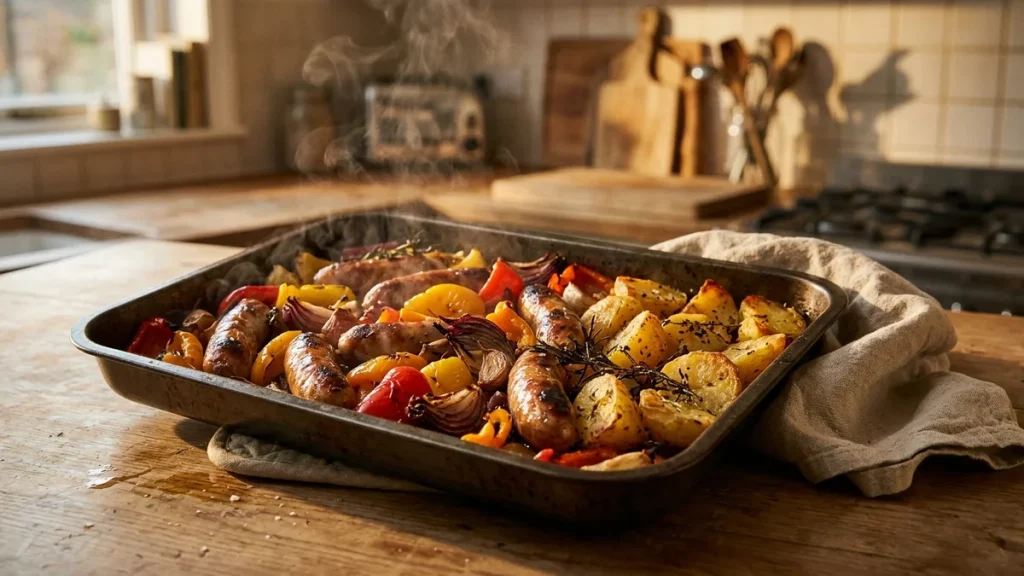
- Sausages with peppers, onion and potato cubes on one oven tray.
- Sweet potato and drained chickpeas with a spoon of curry powder, finished with a handful of spinach.
- A skillet of rice, tinned tomatoes, beans and stock, covered and simmered until the rice is tender.
- One-pot pasta, where dry pasta cooks in the pan with tomato sauce and water, stirred often.
- A frying pan of leftover vegetables with eggs cracked on top and covered until set.
Frozen vegetables are a good budget shortcut. They release water as they cook, so add them near the end of roasting, or stir them straight into a skillet dish.
How Do You Know the Food Is Cooked Safely?
Use a food thermometer and check the thickest part of the food. The US Department of Agriculture lists these minimum internal temperatures.
| Food | Minimum temperature |
|---|---|
| Chicken and other poultry | 165 F (74 C) |
| Ground beef, pork, lamb and veal, including sausage meat | 160 F (71 C) |
| Dishes containing eggs | 160 F (71 C) |
| Fish | 145 F (63 C) |
| Pork, beef, veal and lamb steaks, chops and roasts | 145 F (63 C) and a 3-minute rest |
Colour alone is not a reliable sign, so the thermometer is worth the small cost. A basic probe thermometer is inexpensive and works for every dish on this page.
How Do You Cut Down on Cleanup?
Line the tray with baking paper or foil and wash the board in between. These steps remove most of the scrubbing and keep raw meat away from food that will not be cooked again.
- Cut the vegetables first and the raw meat last, using the same board, then wash the board and knife in hot soapy water.
- Mix the oil and spices in the tray itself rather than in a bowl.
- Soak a baked-on pan with hot water and a drop of detergent while you eat.
- Wash your hands after touching raw meat and before touching anything else.
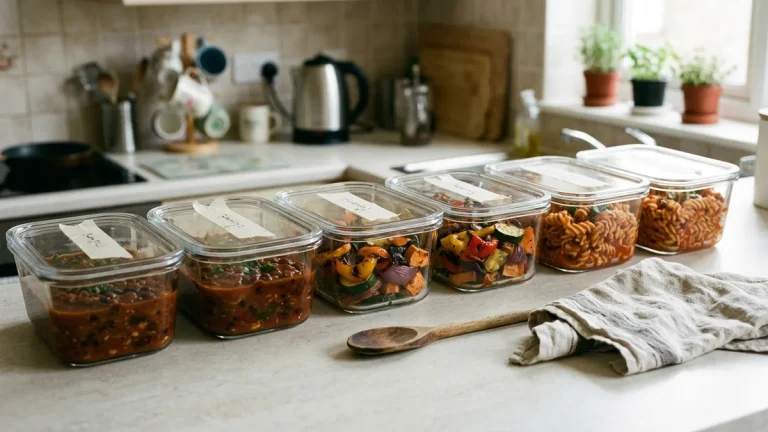
Leftovers should go in the fridge within two hours of cooking, or within one hour if the room is hotter than 90 F. Split them into shallow containers so they cool quickly, keep them for three to four days, and heat them to 165 F before eating. Dishes with rice are the exception: the UK’s National Health Service says to chill cooked rice within an hour and eat it within a day.
How Do You Plan a Week of One-Pan Dinners?
Pick two or three formats and rotate the ingredients instead of learning ten recipes. A tray of sausages and vegetables on Monday, a skillet of beans and rice on Wednesday and an egg skillet on Friday use a short shopping list and very little new equipment.
Buy vegetables that work in more than one dish, such as onions, peppers and carrots, and keep tins of tomatoes and beans in the cupboard. A shopping list built around the formats stops you buying one-off ingredients that sit in the fridge.
What if You Do Not Have an Oven?
A wide frying pan or a sauté pan with a lid does the same job on the stove. Use the same order, with firm vegetables first, and cover the pan to cook them through with a splash of water.
Skillet dishes work best with smaller pieces. Cut the potatoes into thin slices or small cubes and keep the heat at medium so the outside does not burn before the middle is cooked.