
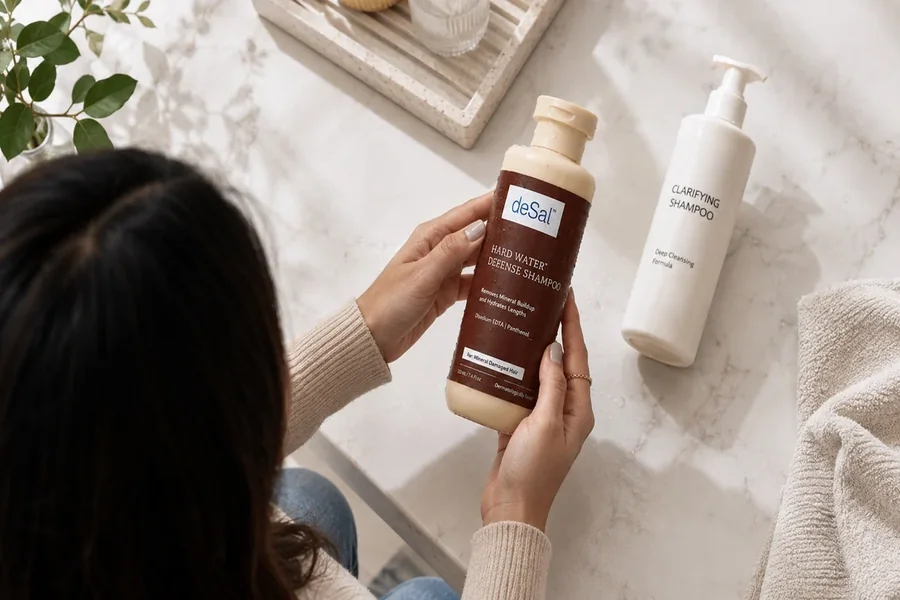
Having hard water in your place of living is not easy for your hair at all. If you feel that your hair seems dry, dull as well as fragile, the source of this problem may lie in your water.
Even though there are many expensive conditioners and hair masks on sale, they do nothing to help. There are ways to solve this issue and the first step is using an appropriate shampoo.
In this blog, you will learn more about the impact of hard water on your hair, characteristics of the best shampoo for hair fall and a way to create an effective care regime for your hair.
What Is Hard Water and Why Does It Hurt Your Hair?
Water that contains high levels of minerals like calcium and magnesium is known as hard water. Although these minerals are safe and healthy for ingestion, they are harmful to the hair and scalp.
Hard water fails to rinse out completely when used in cleaning hair. As such, it settles on the hair strands and scalp forming a layer of residue.
The formation of this buildup will hinder any moisture from getting into the hair. Therefore, it will become dry, frizzy as well as matted.
The minerals found in hard water interfere with the process of making lather during cleaning using normal shampoos. The soap that is used will leave a sticky substance referred to as soap scum on the hair and scalp, leading to irritation, hair loss as well as dandruff.
Signs That Hard Water Is Damaging Your Hair
Before you decide to alter your hair washing routine, it is important to determine whether the problem you face is caused by hard water. These are the most widespread symptoms of damaged hair due to hard water:
- Dry and fragile hair: Your hair resembles straw despite conditioning.
- No shine: Hair lacks luster and looks dull and lifeless.
- Hair color fading: If you color your hair, then the color fades very fast and may become messy.
- Knots and breaks: Your hair becomes tangled and there are plenty of broken hair strands on your brush.
- Itchy or flaky scalp: Mineral deposits make your scalp very dry, which leads to tightness, itchiness or dandruff-like flakes.
- Thick hair roots and greasiness at the tips: Your hair roots are thick but the tips are dry and split.
What to Look for in a Hard Water Shampoo?
But regular use of shampoo on a daily basis is designed to clean your natural oils and dirt out of your hair, it should not remove mineral deposits. For this reason you should apply a special formula.
When you decide to buy the right shampoo for your problem, remember about the next qualities:
- Chelating agents: Chelating agents are probably the most important quality. This substance will catch heavy metals such as calcium, magnesium as well as other mineral deposits attached to your hair. Using chelating agents you will clean the hair from minerals. Such chelators are disodium EDTA, tetrasodium EDTA or phytic acid.
- Mild clarifiers: Clarifying shampoos bring deep cleansing to your hair. But in this case you should not apply any clarifying shampoo because you do not have to wash away all your natural oil. Natural fruit acids will be the better choice.
- Sulfate-free products: Harsh sulfates tend to dry up hair already weakened by the minerals present in hard water. Therefore, choosing a mild formula with no sulfates will help cleanse your scalp while maintaining your hair’s softness and hydration.
- Moisturizers and conditioning agents: Since hard water tends to dry up your hair, consider looking for shampoos rich in conditioning components such as aloe vera, glycerin, panthenol or other plant extracts. These are essential in replenishing moisture immediately after you get rid of the minerals present in hard water.
- Balanced pH: The high alkaline content of hard water leaves the cuticles of your hair open and dry. You need a formula whose pH value is a little more acidic and balanced to bring back smoothness to your hair.
How to Use Hard Water Shampoo the Right Way?
The most effective shampoo will never give good results if used improperly. As hard water shampoos are more potent than common daily shampoos, use these tips to get the best effects from the use of your product:
- Do not use it daily: Both deep cleansing and chelating shampoos have a strong effect. The frequent usage will dry your hair. Thus, you should use your hard water shampoo either weekly or bi-weekly, depending on the hardness of the water you use.
- Pay attention to the scalp and mid-lengths: Use the shampoo on your wet hair and massage it gently on your scalp with fingertips. Let the lather flow to the ends of your hair instead of harshly rubbing them.
- Let it soak for a few minutes: Give the chelators some time to do their job by allowing the shampoo to stay in your hair for two to three minutes before washing off. It will help remove the mineral deposits thoroughly from your locks.
- Follow up with a nourishing conditioner: When your locks are free of the mineral deposits, they need to absorb moisture. Put some deep conditioning treatment from mid-length to the tips of your locks.
- Wash hair with cool water: Cool down your hair at the end of the wash process with cool or lukewarm water instead of warm water. Cold water locks moisture inside the cuticle as well as hot water opens the cuticle making hair prone to frizz.
Extra Tips to Protect Your Hair from Hard Water
In addition to using the right shampoo, a few minor changes in your daily routines may greatly affect your hair protection:
- Add a shower filter: It’s quite easy to find a shower filter that will connect to the pipe in your bathroom and will prevent minerals and chlorine from entering your hair.
- Rinse once a week with apple cider vinegar: Mixing a small quantity of apple cider vinegar with water will make a natural, acidic rinse for your hair which removes impurities and normalizes the pH of the scalp.
- Apply leave-in conditioner: Applying leave-in conditioner on your hair forms a barrier which prevents mineral adhesion to the hair strands.
- Rinse with filtered water: If you have very hard water at home, then always have a bottle of filtered water in the shower for your final rinse.
Conclusion
Being in an area that is supplied with hard water does not need to limit you to having dull, damaged, and lifeless hair. Knowing how these minerals impact your scalp and hair will be the very first step to better hair health.
Using shampoos containing chelating agents, organic acids and hydrating components, it is possible for you to clean your hair properly without making it dry and fragile.
Do not forget to use your shampoo in the proper way, always wash it off with a rich conditioner and think about using an additional filter and an acidic rinse once per week.
By doing so, you will take good care of your hair by protecting it from mineral damage and enjoying soft and shiny hair on a daily basis.