
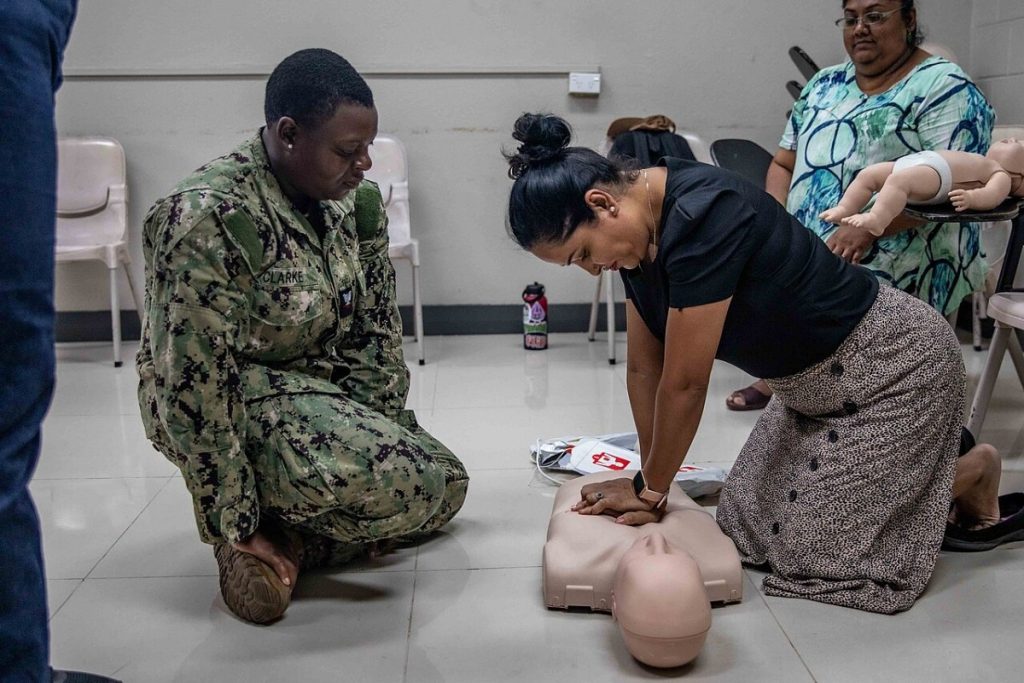
Every college student should know how to do CPR, stop serious bleeding, help someone who is choking and spot a severe allergic reaction. These skills take a day or two to learn. A short Red Cross First Aid training course gives you a certificate that’s useful on campus, at work and at home.
- Why Does First Aid Matter So Much on Campus?
- What Will You Actually Learn in a First Aid Course?
- Can a First Aid Certificate Help You Get a Job?
- Which First Aid Course Should a Student Choose?
- How Long Does Certification Last?
- How Do You Fit Training Into a Busy Student Schedule?
- What Does It Feel Like to Use These Skills for Real?
- Your Quick Student First Aid Checklist
- Frequently Asked Questions
You probably use your student email for a dozen things a week. Software discounts. Library access. Free trials you forgot to cancel. But there’s one student “perk” nobody advertises, and it might be the most valuable thing you pick up before graduation.
It isn’t digital at all. It’s knowing what to do in the first five minutes of an emergency.
Why Does First Aid Matter So Much on Campus?
Think about how college life actually works. Hundreds of people share dorms, dining halls, gyms and labs. People stay up late, skip meals, play intramural sports and cook in tiny kitchens with questionable equipment.
That mix creates real risks. A roommate with a peanut allergy grabs the wrong snack. A friend faints in a crowded lecture hall. Someone slices a finger open while meal-prepping at midnight.
Paramedics are usually minutes away. But those minutes matter. The person standing closest is the one who decides what happens next, and too often that person freezes because they’ve never practised.
What Will You Actually Learn in a First Aid Course?
A good course is hands-on. You won’t just watch slides. You’ll kneel on the floor and push on a manikin until your arms ache a little. Most courses cover:
- CPR and AED use for adults, children and babies
- Choking response, including what to do if you’re alone
- Bleeding control for deep cuts and wounds
- Allergic reactions and how to help someone use an epinephrine auto-injector
- Sprains, fractures and head injuries from sports or falls
- Heat, cold and breathing emergencies
The goal isn’t to turn you into a doctor. It’s to make sure you can keep someone safe until help arrives.
Can a First Aid Certificate Help You Get a Job?
Yes, and more often than students expect. Plenty of part-time and summer jobs ask for first aid and CPR, either as a requirement or as a strong asset. Think camp counsellor, lifeguard, daycare assistant, residence don, coach, fitness desk staff and recreation leader.
In Ontario, workplaces covered by the WSIB must have first aid trained workers on site. So when two applicants look the same on paper, the one who’s already certified saves the employer time and money.
It also looks good on a resume for nursing, education, social work, kinesiology and pre-med programs. It shows you take responsibility seriously. Admissions teams and hiring managers notice that kind of thing.
Which First Aid Course Should a Student Choose?
Course names changed recently under the updated CSA Z1210 standard, which confuses a lot of people. Here’s the short version:
- Basic First Aid (formerly Emergency First Aid) is usually a one-day course. It’s good for general awareness and some workplaces.
- Intermediate First Aid (formerly Standard First Aid) runs longer and covers more injuries and illnesses. Most employers ask for this one.
- CPR Level C covers adults, children and infants. It’s often paired with either first aid course.
- BLS (Basic Life Support) is for healthcare students heading into clinical placements.
Not sure? Check the job posting or your program’s placement requirements. If they don’t say, Intermediate First Aid with CPR Level C is the safest bet.
How Long Does Certification Last?
Red Cross Intermediate First Aid and CPR certificates are valid for three years. That covers most of a college program. BLS is different. It has to be renewed every year, which matters if you’re in nursing or paramedic studies.
Here’s a tip that saves headaches: set a calendar reminder two months before your certificate expires. Nobody wants to discover mid-co-op that their card ran out last week.
How Do You Fit Training Into a Busy Student Schedule?
Students are busy. Classes, shifts, group projects, a social life if you’re lucky. The good news is that first aid training has become a lot more flexible.
Blended learning lets you finish the theory online at your own pace, then attend a shorter in-person skills session. You can do the reading on the bus and save your classroom time for the hands-on part.
A few more ideas that work well:
- Book during reading week or right after exams
- Train with your roommates or classmates so it feels less like homework
- Pick a weekend session if your weekdays are packed
- Save your digital certificate somewhere you can find it fast for job applications
What Does It Feel Like to Use These Skills for Real?
Most people who take first aid never have to use it in a dramatic way. But many do use it in small ways. A burn treated correctly. A friend calmed down during a panic attack. A sprain wrapped properly instead of ignored.
And sometimes it’s bigger. Students have helped classmates who collapsed at the gym or choked at a party. In every one of those stories, the helper says the same thing: “I just remembered what we practised.”
That’s the whole point. Practice builds confidence, and confidence is what gets you moving instead of freezing.
Your Quick Student First Aid Checklist
- Take a first aid and CPR course before your next job search
- Learn where the AEDs are in your residence and campus gym
- Keep a small first aid kit in your room
- Know your roommates’ allergies and where they keep their medication
- Save emergency numbers and your campus security line in your phone
If you are looking for first aid training near Queen Street East, Kennedy Road South, downtown Brampton, or other areas close to our facility, then you may reach out to Coast2Coast First Aid/CPR – Brampton in that area. If you’d like to compare dates and formats before booking, you can see Coast2Coast First Aid options for students.
Frequently Asked Questions
Is a first aid course hard to pass?
No. Courses are designed for beginners. Instructors demonstrate every skill and give you time to practise until you feel confident.
Can I take first aid training online?
You can complete the theory online through blended learning, but the hands-on skills portion must be done in person to earn a valid certificate.
How long is a first aid certificate valid?
Red Cross Intermediate First Aid and CPR certificates are valid for three years. BLS certificates need to be renewed every year.
Do I need any medical background before taking a course?
Not at all. You just need to show up ready to participate. Wear comfortable clothes, because you’ll be kneeling and moving during practice.
Which course do most student jobs ask for?
Intermediate First Aid with CPR Level C is the most common request, but always check the job posting or your program’s placement rules first.