Choosing decking for an outdoor area involves more than finding a surface that looks attractive. The material needs to handle rain, sunlight, moisture and regular use without becoming difficult or expensive to maintain. For homeowners in Singapore, these considerations are particularly important because outdoor surfaces are exposed to a tropical climate throughout the year.
- What Is Composite Wood Decking?
- Why Homeowners Consider Composite Decking
- How Does Composite Decking Perform in Singapore's Climate?
- Where Can Composite Wood Decking Be Used?
- What Are the Limitations of Composite Decking?
- What Should You Check Before Buying?
- Is Composite Wood Decking Worth Considering?
- Final Thoughts
Composite wood decking has become an option for balconies, patios, gardens and other outdoor spaces. It offers the appearance of timber while using a manufactured material designed to reduce some of the maintenance associated with natural wood.
What Is Composite Wood Decking?
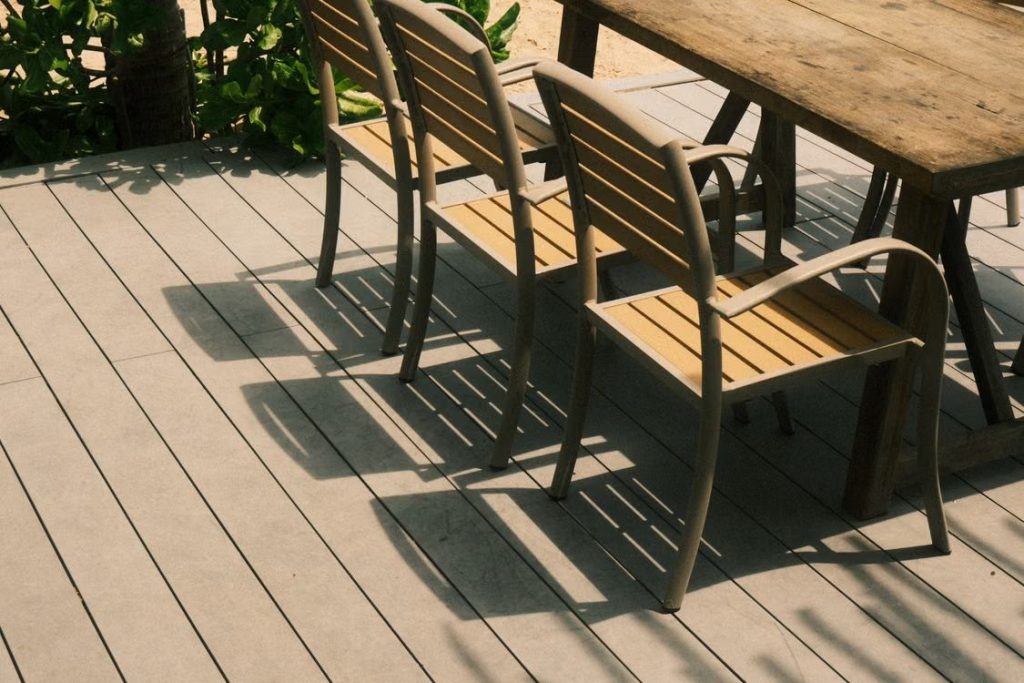
Composite wood decking is generally manufactured using a combination of wood fibres or wood flour and plastic. Some products also contain additives that influence their colour, strength, resistance to ultraviolet exposure and other properties.
The materials are processed into boards designed for outdoor installation. Depending on the manufacturer, the finished surface might have a smooth texture, a wood-grain pattern or a more pronounced embossed finish.
Unlike natural timber, composite boards have a more consistent appearance. They are available in various colours, widths and profiles, making it easier to coordinate the deck with surrounding walls, furniture and landscaping.
Why Homeowners Consider Composite Decking
One of the main reasons homeowners choose composite decking is its relatively low maintenance compared with many natural timber options.
Natural wood often requires periodic treatment to maintain its appearance and protect it from moisture and weather exposure. Composite boards generally do not need regular staining or oiling, although they still require cleaning.
Another consideration is appearance. Composite decking provides a wood-like finish without the natural variations found in timber. This consistency suits homeowners who prefer a more uniform outdoor design.
The range of available finishes also makes it easier to create different looks. Light-coloured boards can complement a contemporary patio, while darker wood-effect finishes might suit a more traditional garden setting.
How Does Composite Decking Perform in Singapore's Climate?
Singapore's weather presents several challenges for outdoor materials. Frequent rain, high humidity and strong sunlight can affect decking surfaces and the structures beneath them.
Composite boards are designed for outdoor use, but their ability to withstand these conditions depends on the manufacturer's specifications. Products intended for indoor or sheltered applications should not be assumed suitable for fully exposed areas.
Moisture resistance is one factor to examine. Composite decking generally absorbs less moisture than untreated timber, but this does not mean every product is waterproof. Water can still collect around joints, beneath the boards or within the supporting structure if drainage is inadequate.
Sunlight exposure is another consideration. Some composite products can fade over time, particularly when exposed to intense ultraviolet radiation. Protective surface treatments might improve colour retention, but performance varies between brands.
Heat retention also deserves attention. Darker boards exposed to direct sunlight can become hot underfoot. If the deck receives strong afternoon sun, compare lighter finishes and ask the supplier about the product's surface temperature characteristics.
Where Can Composite Wood Decking Be Used?
Composite decking is suitable for several outdoor applications, provided the selected product and installation system match the intended environment.
Balconies and Terraces
A balcony or terrace can become a more comfortable extension of the indoor living area with a timber-style deck. Composite boards offer a consistent finish and can be paired with outdoor furniture, planters and suitable lighting.
Before installation, check the balcony's drainage and waterproofing arrangements. The decking should not obstruct floor drains or trap moisture against the underlying surface.
Garden and Patio Areas
Composite decking works well in garden settings where homeowners want a defined space for seating, dining or relaxing. It can create a transition between the house and landscaped areas.
The supporting framework should be suitable for outdoor exposure, with adequate ventilation beneath the boards. This helps reduce moisture-related problems and allows water to drain away.
Poolside Areas
Some composite products are designed for use around swimming pools, but suitability should never be assumed. Check the manufacturer's specifications for water exposure, slip resistance and installation requirements.
A surface that becomes slippery when wet might be unsuitable for a poolside environment. Cleaning requirements also matter because algae, dirt and other contaminants can affect traction.
What Are the Limitations of Composite Decking?
Although composite decking offers several practical advantages, it has limitations that homeowners should understand before purchasing.
One consideration is the initial cost. Depending on the product, finish and installation system, composite decking might cost more upfront than some basic timber options. However, the overall comparison should also account for maintenance and potential replacement costs.
Surface scratches are another possibility. Heavy furniture, sharp objects, and dragging items across the boards can damage certain finishes. Some scratches are more noticeable on particular colours or surface textures.
Composite boards can also experience expansion and contraction as temperatures change. Installers need to follow the manufacturer's recommended spacing and fastening requirements. Poor installation can lead to gaps, movement or other problems.
Mould and algae can develop on dirty or damp surfaces, particularly in shaded areas with limited airflow. Regular cleaning and proper drainage remain necessary.
These limitations do not make composite decking unsuitable. They simply highlight why product selection and installation quality matter.
What Should You Check Before Buying?
Start by asking whether the decking is specifically rated for outdoor use. Request product specifications covering moisture exposure, ultraviolet resistance, surface performance and recommended applications.
Check the board dimensions, thickness and supporting structure requirements. A supplier should be able to explain the correct joist spacing, fastening system and expansion gaps for the chosen product.
It is also worth inspecting physical samples. Online photographs do not always show the actual colour, texture or surface finish accurately. View the boards under natural light if possible, especially when choosing between several shades.
Ask about the warranty and what it covers. Some warranties include specific conditions relating to installation, maintenance and environmental exposure. Read these details rather than assuming all types of damage are covered.
Finally, compare the complete installation cost. Include the subframe, fasteners, edge finishing, labour and any preparation work required for the existing surface.
Is Composite Wood Decking Worth Considering?
Composite decking is worth considering if you want a wood-like outdoor surface without the regular staining or oiling associated with many natural timber products.
It is particularly useful for homeowners who prefer a consistent finish and are comfortable with the product's upfront cost and maintenance requirements.
Final Thoughts
Composite wood decking offers a practical alternative to natural timber for outdoor spaces. Its consistent appearance and reduced need for regular surface treatments appeal to homeowners who want a wood-like finish with a different maintenance routine.
Before choosing a product, consider its outdoor specifications, heat retention, slip performance, installation requirements and warranty. Proper drainage and a suitable supporting structure are just as important as the boards themselves.
With careful selection and correct installation, composite decking can provide a functional outdoor surface that suits the demands of Singapore's climate.