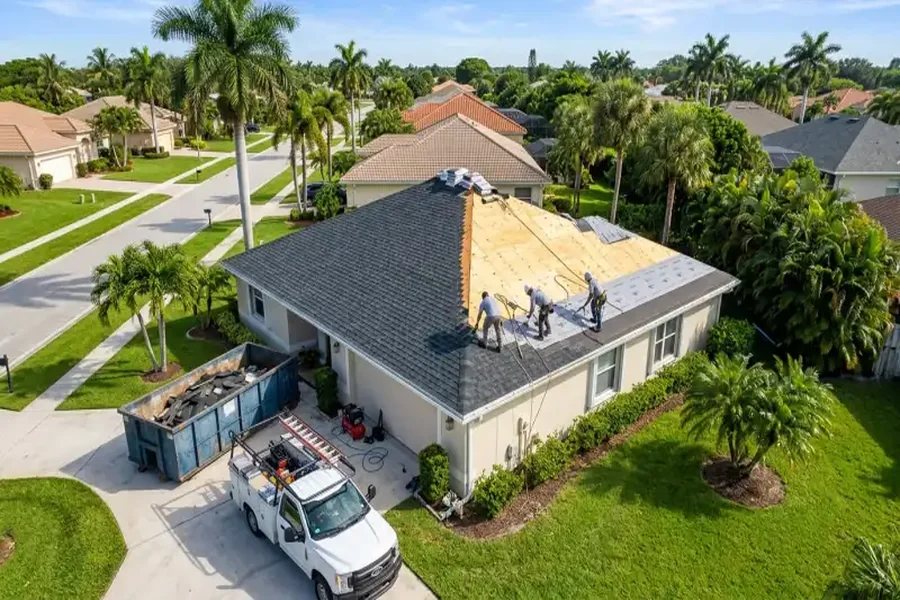
Most South Florida roofs don’t die of old age. They get cooked. A west-facing shingle field takes an afternoon beating that a roof in Georgia never sees, and the hardware holding it down gets tested by wind a few times every summer. So planning a replacement here is a different job than it is almost anywhere else in the country, and the decisions you make in the first week of the project decide whether that roof lasts twelve years or thirty.
- Why a South Florida roof ages on a different clock
- Which roofing material actually makes sense here?
- The underlayment decision nobody talks about
- Wind ratings: reading the fine print
- Permits, inspections, and why you never skip them
- The five-point check before you sign anything
- Timing the job around storm season
Here’s the short version: pick your material based on wind rating and heat first, price second. Get the underlayment specified in writing. And budget for the stuff nobody puts on the quote, like permits and tear-off. If you’re comparing crews right now, a good shop that handles roof replacement in South Florida every week should be able to walk you through all three for your specific street, not just hand you a lump figure on a napkin.
I’ve talked to enough homeowners mid-project to know the pattern. The quote looked fine. Then the decking was soft, the permit fee landed, and the final number was nothing like the number on the paper. This guide is built to keep you out of that phone call.
Why a South Florida roof ages on a different clock
Three things work on a roof down here at once, and they don’t take turns.
UV is the loud one. Constant sun breaks down the oils in asphalt shingles and dries out the sealant strips until the tabs start to lift. Salt air does its own quiet work near the coast, corroding fasteners and flashing long before the roof surface looks tired. Then you get the wind, and the rain that drives sideways under the best intentions.
The practical takeaway is that your material choice and your attachment method matter more than the brand name on the bundle. A product that performs beautifully in a dry climate can be the wrong pick on a roof facing Biscayne Bay. Ask specifically how the chosen system handles heat, salt spray, and uplift, and expect a real answer, not a shrug.
Which roofing material actually makes sense here?
Walk any South Florida neighborhood and you’ll see the split: tile and metal on newer homes, shingle on a lot of the older ones, and flat systems on the low-slope sections that trip up first-time buyers. Each one earns its place.
- Tile: Heavy, long-lived, and it handles sun well. The catch is structural, because your framing has to carry the weight.
- Metal: Good wind performance and decent heat reflection, usually at a higher upfront price. Standing seam hides its fasteners, which is exactly what you want near the ocean.
- Shingle: Cheapest entry point and fastest to install. Lifespan is shorter under our sun load, so don’t compare a shingle roof’s price to a metal roof’s price without comparing the years.
If I were spending my own money on a coastal home and planned to stay fifteen years, I’d pay for metal or tile and stop thinking about it. If this is a rental or a flip, shingle with a solid underlayment is a far easier call to defend.
The underlayment decision nobody talks about
Your roof is only as good as the layer you never see. The underlayment is the secondary water barrier, and on a tile or metal roof it does most of the actual water stopping. Down here it needs to hold up under punishing deck temperatures, and there are plenty of options on the market that are perfectly fine in cooler climates and mediocre under Florida sun.
Ask what brand and grade goes on your deck, and ask for it on the estimate. A contractor who can name it without checking is a contractor who thinks about it. One who waves the question off is telling you something too.
Wind ratings: reading the fine print
Wind uplift ratings aren’t marketing fluff. They come from standardized testing, and you can verify them. UL Solutions maintains the product certification listings that show which assemblies have actually been tested rather than just described as tough in a brochure. Your material and attachment pattern should appear in those listings, and it’s completely fair to ask the contractor for the product listing before you sign.
Look at your home’s surroundings too. A roof built up at the corner of a block of two-story homes catches more wind than one sheltered by a neighbor’s tree line. Your contractor should be sizing the attachment to your site, not just to a generic spec.
Permits, inspections, and why you never skip them
South Florida roofing is heavily regulated, and that’s good news for you. The state’s building code revisions after past storms set stricter requirements for how roofing products are approved and how assemblies are fastened, and local building departments enforce them at inspection. The Florida Building Commission publishes the code and the product approval system that supports it.
A crew that suggests skipping the permit for a “small” replacement is doing you a real disservice. Unpermitted work can complicate an insurance claim and can surface years later when you try to sell. Insist on the permit and the final inspection, and keep both records somewhere you can find them.
The five-point check before you sign anything
This is the part you can actually act on this week. Run every bid you get through the same five questions and the comparison gets a lot clearer.
- Is the underlayment named? Brand, product, and grade in writing. If it’s blank, the answer is no.
- Is the decking allowance realistic? Re-roofs usually uncover some soft plywood. Ask what happens to the price if they find ten sheets of damage versus thirty.
- Are permits and dumpsters inside the number? Those costs are real, and a quote that leaves them out isn’t cheaper, it’s just incomplete.
- What’s the wind rating and can they show the listing? Tested and documented, not verbally promised.
- How attached is the crew to this area? A local operator answers the phone in year four. A storm chaser is two states away by then.
Timing the job around storm season
The calendar matters more here than most homeowners realize. Crews get slammed from late spring onward, and once a system forms in the Atlantic, inspections and material deliveries stall for everyone. If your roof is showing its age, aim to have it done in the shoulder months rather than trying to schedule a tear-off in the middle of an active season.
And once the roof is on, treat the maintenance seriously. Clear the valleys, keep an eye on flashings near your AC unit, and photograph anything odd after a big storm. The Insurance Institute for Business & Home Safety publishes practical guidance on how roofs fail in high wind, and a lot of it comes down to edge details and penetrations you can inspect yourself.
None of this is glamorous. It’s the difference between a roof that quietly does its job for thirty years and one that sends you scrambling for a tarp at midnight in August. Get the underlayment named, get the wind rating in the file, pull the permit, and ask the questions a salesman hopes you won’t. Your future self, standing in a dry living room during a summer squall, will thank you for it.