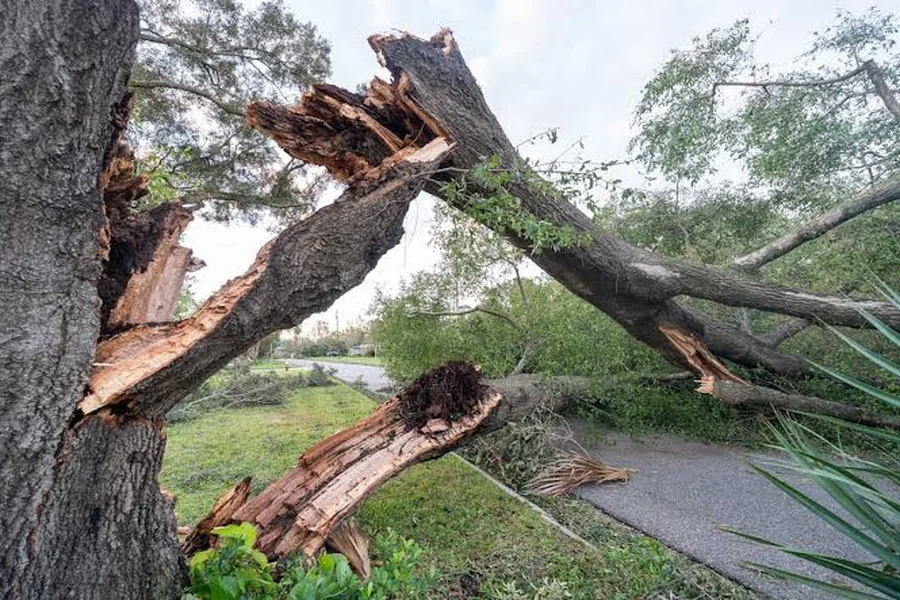
Your live oak didn’t fall because a hurricane showed up. It fell because of a crack that opened in 2019 and nobody ever looked up.
That’s the thing about trees on the coast. The damage usually starts years before the wind event, and it hides above the roofline where nobody’s walking past it on the driveway. If you own property in Venice or anywhere along that stretch of Sarasota County, the prep work that matters doesn’t happen in the 48 hours before a storm. It happens now, in a slow, boring, methodical way. And if you’d rather hand the ladder to someone who has already made the mistakes, a tree service in Venice, FL by Loyalty Tree is the practical starting point, because they can read a canopy in about ten minutes the way you read a room.
What follows is the routinue I’d run on any coastal lot: a four-step inspection, the salt story most homeowners get backward, and the one thing you should absolutely never do when a system is two days out. Steal all of it.
The Four-Look Sweep I Run Before Any Storm Season
I call it the Four-Look Sweep, and it takes one Saturday morning per tree. It exists because the obvious stuff, the limbs waving at your roofline, is rarely what fails. Work from the ground up.
- Look at the flare. The base where trunk meets soil should widen out. If it doesn’t, or if the soil is mounded up around it like a Volcano, the tree may already be rocking underneath. Root plate failure is the quiet one. The tree looks fine on Tuesday and lies across your yard on Thursday.
- Look for the Y. A narrow crotch on a main limb is a future tear. Two trunks that meet at an acute angle share less wood, and wind finds that seam fast.
- Look for the lean, second glance. A tree that was always leaning is probably fine. A tree that leaned recently means the roots moved. That is a totally different problem and it doesn’t heal.
- Look down, not just up. Fresh cracks in soil, fungi clustered at the base, or an unusually heavy branch scar are all pointing at the same conclusion: this tree is running on less wood than it looks like.
Write down what you find. Photos from the same four angles after each rainy season make the next sweep faster, and they give you something honest to compare against.
Keep in mind that you’re not out to fabricate a storm-ready lot. Trees need leave litter and a deep root run to actually hold up, so overly tidy yards can fail exactly as fast as neglected ones.
Does Trimming Too Much Weaken a Tree?
Yes. And it’s the most common mistake I see on the barrier islands.
There’s a physical reality underneath this. The Florida Legislature spells out a detailed permitting structure around coastal and protected tree work, and the reasons are rooted in how the tree functions. Cutting a quarter of the canopy to let the wind “blow through” steals the tree’s own growing capacity for years. The tree then pushes out fast, weak shoot growth along the cuts, and those new limbs break more easily than the ones you removed.
What actually stabilizes a coastal tree is selective thinning: removing dead wood, crossed limbs, and the long horizontal branches most likely to catch wind like a sail. Done deliberately, it keeps the tree’s structure balanced. Done by a ladder and a chainsaw at 4 p.m. on a Friday, it creates weak seams that splinter under pressure.
Here’s the rule I’d hand a friend: the canopy shouldn’t look shorter when the crew packs up. It should look the same, minus the bad pieces. If you can see daylight changed the whole shape, you overpaid for a harder job next year.
Palm trees run on a different rulebook entirely. The dead fronds can be trimmed back, but the crown needs to keep enough live material to insulate the growing point, and shaving a palm into a pencil is a long-term mistake. Look at the palms along the Venice shoreline and count how many have been shaved. Then count how many of those dropped a crown in the last blow.
The Salt Bucket Trick
Salt burn is the diagnosis homeowners guess wrong most often. A tree near the coast that turns brown after a storm is usually treated as wind damage, but the salt is what deserves your attention.
The fix is unglamorous and works better than most products sold at the garden center. Water the root zone deeply after a storm event, twice, a few days apart. Slow, deep watering moves salt below the root mass. It costs you a hose and a morning.
The counterintuitive part: some coastal trees handle salt better than their neighbors. Wax myrtle, certain palms, and sea grape hold up in ways that a young magnolia planted too close to the water never will. That’s a planting decision, not a pruning one, and it belongs in your plan for the next tree you add, not this season.
One more thing before the season turns. The National Weather Service tracks and forecasts tropical systems for the entire Gulf and Atlantic coastline through its public advisories, and it publishes the timelines behind those forecasts. Use them. That data gives you days of warning, which is the entire window for anything reusable. The weeks before are for planning.
Never Do These Things With a Storm in the Forecast
The 48-hour window is where good intentions go wrong. Three things I’d cross off the list:
- Never trim during an active warning or watch. Dropping limbs into a utility line or on your own roof in 40 mph gusts is a self-inflicted injury, and it keeps emergency crews from doing the work that actually matters.
- Never brace a tree with rope and an urge. A tree tied to a fence post doesn’t get stronger, and the rope can cut into bark. That’s a wound that invites rot.
- Never leave the loose stuff out. Patio furniture, the planter that’s been at the fence line since spring, the busted footer from the shed project. Those are the projectiles, not the branches.
What I would spend the last two days on is simple. Take photos of your trees from the same four angles. Move the car out from under the oldest oak. Charge your phone. Move on.
Picking Someone to Do the Work
You’ll get three bids. The one with the low number and no credentials is the one that ends up as a story at the neighborhood Christmas party.
Ask for proof of insurance, then look at the certificate to see whether it covers tree work or just general landscaping. Ask where the debris goes, because a hauler that vanishes with your driveway fill leaves you holding the disposal bill. Ask whether the person walking your property is the person who will be in the bucket, and watch their eyes when they answer.
The last question I’d ask is the one most people skip. “What would you leave alone?” A crew that owns a saw and likes using it is a risk. A crew that tells you half your trees are fine is telling you they’re thinking about the ones you keep.
What This Actually Comes Down To
The trees that crush cars and punch through roofs are almost never the healthy ones. They’re the ones with the narrow crotch, the buried flare, and the lean nobody wrote down. You don’t beat a storm. You just get your inspections done early, thin thoughtfully, water through the salt, and leave the paint cans where they belong when the forecast turns. Then you look up at your canopy after the last band of rain passes and know what you’re looking at. When was the last time you actually looked at your tallest tree, all the way to the top?