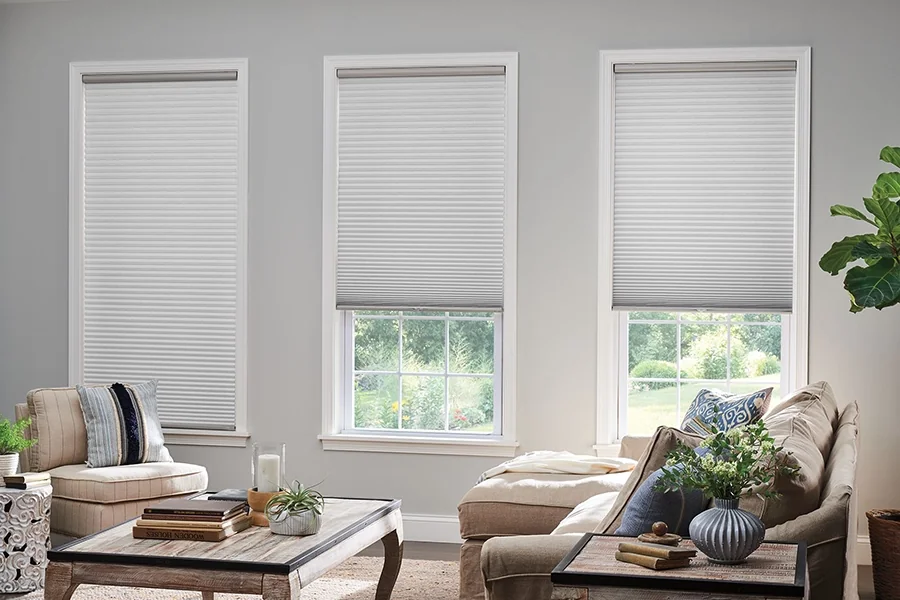
Your west facing bedroom hit 94 degrees last July while the thermostat said 78. That gap is not a mystery and it is not your air conditioner’s fault. It is the window, and whatever is hanging in front of it.
- What the Arizona sun does to window coverings
- Shutters versus blinds, side by side
- Where blinds still make sense
- The four question test before you order anything
- Dust, monsoons, and the maintenance reality
- Choosing a material that survives the desert
- Frequently asked, briefly
- Pick the window that bothers you most and start there
I have watched a lot of Phoenix homeowners buy horizontal blinds because they cost less in the moment, then replace them within three summers when the slats warp, the cords fray, or the whole assembly starts rattling every time the AC kicks on. Shutters cost more up front and ask almost nothing of you afterward. If your windows take direct afternoon sun, that trade is worth making; here is exactly why, and how to decide for your own house.
Before you compare a single price quote, get clear on what you actually want the window to do. A treatment that blocks glare but traps heat is just a very expensive curtain, and plenty of homeowners in the Valley learn that the hard way. If you want a fixed, built in solution rather than something you take down and rehang each season, custom shutters in Phoenix are built to the exact dimensions of your openings, which is the whole reason they perform differently than off the shelf options.
What the Arizona sun does to window coverings
Ultraviolet light is the quiet destroyer here. It breaks down plastics, fades fabric, and turns cheap paint chalky. A window facing south or west in the Valley can take six or more hours of unfiltered sun on a clear day, and the interior surface right behind that glass gets hot enough to matter.
The Department of Energy notes that windows are responsible for a meaningful share of a home’s heating and cooling load, which is why treatment choice shows up on your power bill and not just in your aesthetics. Blinds sit close to the glass and trap a pocket of hot air between the slats and the pane. Shutters mount to the frame with a gap that lets air move, so heat has somewhere to go instead of radiating into the room.
That is the mechanical difference, and it is the one most people miss when they compare price tags at a big box store.
Shutters versus blinds, side by side
Here is the honest comparison, minus the sales pitch. Neither option is wrong for every house, but they age very differently in desert conditions.
| Factor | Custom shutters | Horizontal blinds
|
|---|---|---|
| Mounting | Fixed to the window frame | Hangs from a headrail |
| Cords | None, tilt rod or gear control | Usually corded |
| Heat behavior | Air gap behind the panel | Traps hot air at the glass |
| Dust in monsoon season | Wipe with a damp cloth | Slats collect grit, cords fray |
| Repair | Replace a louver or tilt rod | Often a full rehang |
| Resale perception | Reads as a built in feature | Reads as a temporary fix |
One row deserves a longer look: safety. Corded blinds remain a strangulation hazard for young children, and the Federal Trade Commission has spent years pushing manufacturers toward cordless designs for exactly that reason. If you have a toddler or a curious dog, that alone can settle the question.
Where blinds still make sense
I will not pretend shutters win everywhere. Blinds are the better call in a rental where you cannot drill into the frame, on a north facing window that never sees direct sun, and in a room you plan to renovate in the next year or two. They are also cheaper to swap when your taste changes, and for a home office window you keep closed all day, that flexibility is real value.
What you should not do is put cheap horizontal blinds on the two or three windows that take the worst of the afternoon sun and expect them to last. That is where the money quietly drains out of your wallet, one replacement set at a time.
The four question test before you order anything
Run your windows through this before anyone comes out to measure. It takes ten minutes and it will save you a bad decision.
- Which direction does the window face? South and west are the punishment windows. North and east are gentler and can handle a lighter option.
- Is anything within reach of a cord? Cribs, low sofas, pet beds. If yes, go cordless or go shutter.
- How long are you staying? Under three years, blinds. Longer, the math flips toward a fixed installation.
- How fiddly is the window? Arches, odd widths, deep sills, and slider doors are where off the shelf products fail and measured builds earn their cost.
My own rule: if a window is in a room you use every day and it faces west, spend the money. You will feel the difference by two in the afternoon, not just see it on a quote.
Dust, monsoons, and the maintenance reality
Dust storms are a Phoenix fact of life, and the National Weather Service tracks them as a defined hazard across the Southwest. Fine grit finds its way into everything, and it settles on horizontal surfaces with enthusiasm. Blinds give that grit dozens of tiny ledges to cling to, plus cords that trap it permanently.
Shutters give you flat panels and a tilt rod. A microfiber cloth and five minutes per window, once a month, keeps them looking new. I would take that routine over rethreading a cord any day.
One more thing nobody mentions: monsoon season brings dust, then rain, then more dust. If you leave windows open to catch the cooler air after a storm, shutters stay put while blinds slap against the frame. Small annoyance, real annoyance, every August.
Choosing a material that survives the desert
Wood looks gorgeous and I will not argue with anyone who wants it in a formal living room. But wood and dry desert air are not always friends, and composite or synthetic builds handle humidity swings better in kitchens, bathrooms, and laundry rooms. Ask what happens to the finish after five years of sun exposure. A vendor who cannot answer that question plainly is telling you something.
Custom build quality also matters more than most people expect. Measurements taken to the eighth of an inch, hinges rated for daily use, and louvers that stay where you put them. That is the difference between a shutter that feels like part of the house and one that feels like a kit.
Frequently asked, briefly
Are shutters worth it in a house I might sell? Buyers notice fixed window features. They read as quality, and they photograph well in listing shots.
Can I install them myself? On standard rectangular windows, sometimes. On arches, sliders, or anything with an odd reveal, hire the measure and install. A bad fit shows.
How long do they last? A well built set outlives the average homeowner’s stay in the house. That is the whole argument in one sentence.
Pick the window that bothers you most and start there
You do not need to treat the whole house in one weekend. Start with the room that cooks in July, measure it properly, and see how the difference feels before you commit the rest of the budget. If those windows face west and take the brunt of the afternoon, the answer is usually the fixed, measured build, and it is the choice I would make again.
Walk through your house at 3 p.m. on a hot day and put your hand near each window. Whichever one feels warmest is the one to fix first. What is stopping you from starting there this week?